
“After my flowers bloom, hundreds of flowers will die” comes from which poem?
- Auth:Core Water
- Jul 28, 2026
“After I bloom, hundreds of flowers will kill” is a very powerful poem.Many people have noticed it again because of the TV series "Hundred Flowers Killing", and they will also search for where this poem comes from and what the original poem means.It is not a modern line, but a famous line written by Huang Chao from the Tang Dynasty in "Bu Di Hou Fu Ju".
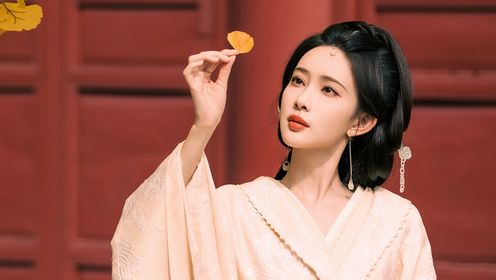
The most arresting thing about this poem is that it makes flowers look like weak things.Chrysanthemums bloom in autumn, and hundreds of flowers wither in the autumn wind. The poems use flowers to express aspirations, and write a kind of edge that refuses to bow its head and overcome the old situation.
“I will kill all the flowers after they bloom” Source
“After the flowers bloom, a hundred flowers will kill them”. It comes from Huang Chao's "Bu Di Hou Fu Ju" in the Tang Dynasty.
The original poem is as follows:
Wait until autumn comes on September 8th,
After I bloom, the flowers will be killed.
The incense array reaches Chang'an,
The whole city is covered with golden armor.
The "“" in the title of the poem means "failed" in the imperial examination.Huang Chao uses chrysanthemums to express his feelings. The chrysanthemums in the poem are not the cold and aloof flowers described by ordinary literati, but flowers with sweeping momentum.As soon as it blooms, the autumn mood is deep and the flowers are no longer there; its fragrance rushes to Chang'an, and the whole city seems to be covered with golden armor.
”What does it mean to kill all the flowers after they bloom“
Literally, "after my flowers bloom, all flowers will be killed" means: by the time my flowers bloom, all other flowers will have withered.The ”wohua“ here generally refers to chrysanthemums; ”杀“ has the meaning of withering and decay in the context of ancient poetry, and also brings out a strong sense of oppression.
The point of this poem is not just the blooming and falling of flowers, but the momentum brought by the word "I".The poet describes the chrysanthemum as a force that appears on its own initiative and overwhelms all flowers.It no longer competes with the flowers in spring, but blooms golden all over the city alone in autumn, like starting in a cold place, but also like turning over from defeat.
Therefore, this poem is often understood as: the real strong man may not appear on the scene when everything is busy, but may suppress the situation in his own way after all things have withdrawn.It has arrogance and counterattack.
The meaning of each sentence in the whole poem
Wait until autumn comes on September 8th:Wait until autumn and September come.This points out the time and puts the atmosphere in the bleak autumn.
After my flowers bloom, hundreds of flowers will kill you:After the chrysanthemum blooms, other flowers have withered.The poem takes advantage of the chrysanthemums blooming alone in autumn to express the strength of not going the same way as others.
The incense array reaches Chang'an:The fragrance of chrysanthemums rises into the sky and fills the sky.The word ”transparent gives the fragrance the power to penetrate the city.
The whole city is covered with golden armor:The city is covered with golden chrysanthemums, like wearing golden armor.The picture is extremely grand, and it also gives the colors a fighting spirit and majesty.
What does it have to do with 《Hundred Flowers Killing》the title of the play?
The name of the TV series《Hundred Flowers Kill》 can easily remind people of the word "Hundred Flowers Kill" in this poem.If you look at the fate of the characters in the play, it is more like a temperament reminder: the protagonist is not a person waiting to be chosen by fate, but a person who stands up again in the old situation.
Characters like Shen Xihe and Gu Qingzhi have a clear sense of counterattack.What they face is not ordinary misunderstandings, but old family cases, identity dilemmas and power implications.The word "Hundred Flowers Kill" in the title of the play is not only ruthless, but can also be understood as: when a person truly takes back the initiative, the rules, arrangements and calculations that have been placed on her in the past will begin to fail.
This is also the reason why "After the flowers bloom, a hundred flowers will kill" is suitable to be used to understand - a hundred flowers will kill -.It is not written about docile flowers, but flowers that bloom against the trend; instead of waiting for spring, they spread their colors all over the city in the autumn wind.
Related line expressions
In this life, I want to make my own decisions.
This type of expression is suitable for summarizing the emotions of rebirth and counterattack in "Hundred Flowers Killing".It is close to the spirit of "I will kill a hundred flowers after they bloom": no longer obey the old fate, but change the situation with my own hands.
Survival is not about continuing to bow your head.
This sentence corresponds to the character's state of getting back up from the pain.The chrysanthemums in the poem bloom in autumn, and the characters in the play often start to fight back at the lowest point.
I won't refund the old account until it's settled.
The edge of "A Hundred Flowers Kill" falls on the characters, that is, they no longer avoid the truth, and they no longer swallow their grievances.What she wants is not the pity of others, but to settle old accounts one by one.
“My Flowers Bloom and Kill a Hundred Flowers” is remembered because it depicts the flowers as if they were on the edge of a knife.It comes from - Bu Di Hou Fu Ju -, the original poem only has four lines, but it has the picture of a city full of golden armor, and also has the momentum of being unwilling to be trapped in a low place.Using it to look at "A Hundred Flowers Kill", the most appropriate place is here: the real flowering is not to be seen as beautiful, but to carve out its own position from the old destiny.
You Might Like
Website Disclaimer: The content of ““After my flowers bloom, hundreds of flowers will die” comes from which poem?” on this site is provided by user "HorizonHerald" and is for display purposes only. Copyright belongs to the original author. If your rights have been infringed, please contact us, and we will remove it as soon as possible.
If your rights are infringed, let us know, and we will remove it ASAP