
《Jiang Hai Chao Sheng》A complete introduction to the plot of each episode
- Auth:Enchanting Ice
- Jul 30, 2026
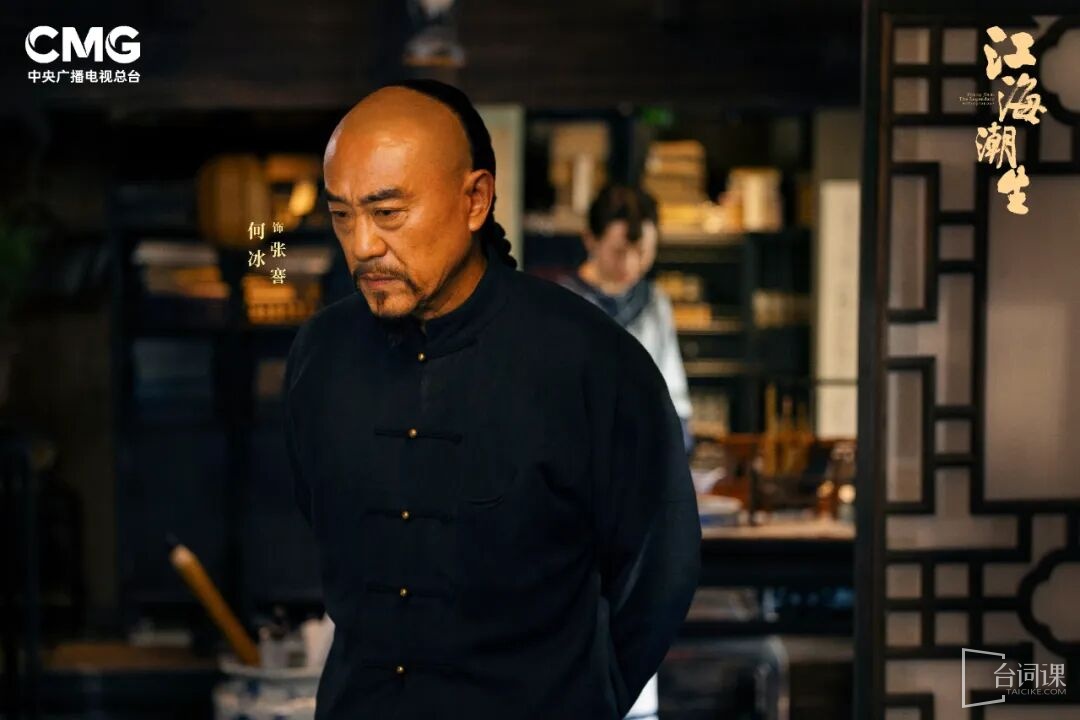
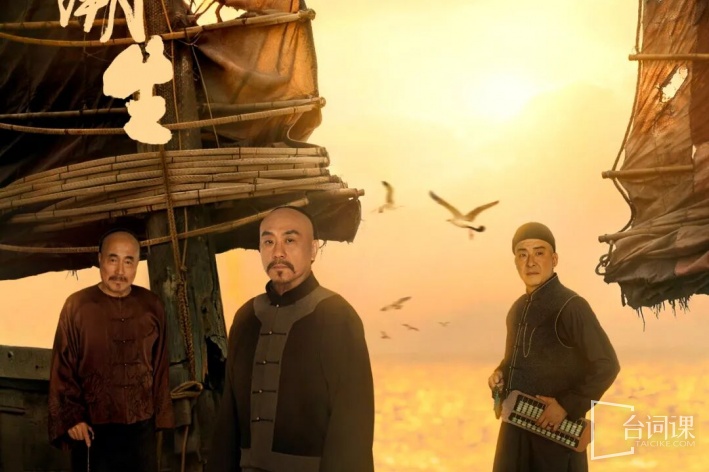
《Jiang Hai Chao Sheng》 is a modern historical drama based on Zhang Jian's life experience. It is directed by Wang Weimin and stars He Bing, Wang Ou, Yang Lixin, and Hao Ping.The whole play sets the story against the background of social transformation from before and after the Sino-Japanese War of 1888-1899 to modern times, and describes Zhang Jian's process of stepping out of the traditional official career from the top scholar in the new department to organizing team training, setting up industry, and promoting education and local construction.In the play, there are not only the turbulence of the government and the realistic pressure at the beginning of the national industry, but also the struggle between the characters' ideals at home, family relationships and business choices.The plots of the episodes are organized below in the order they have been broadcast, and revolve around Zhang Jian's starting point from worrying about the country and seeking change to deciding to abandon his official position and join business.
Episode 1 plot introduction
In the Sino-Japanese War, Enke released the results, and Zhang Jian was ranked number one in high school, but he was not immersed in the joy of fame.The outbreak of the Sino-Japanese War and the successive defeats of the Qing army made him deeply worried about the situation in Korea.Because Shangshu's criticism of Li Hongzhang angered the court, and when his father died, Zhang Jian quickly ended his short career and returned to his hometown to maintain the system.Facing the crisis along the coast, he persuaded Tongzhou magistrate Zhao Yingde to organize regiment training, and clashed with the commander-in-chief Gao Baoshan over the source of troops and money and food.Zhang Jian went around raising funds in order to recruit courage, and received help from Jiang Mengsheng. He also impressed Dong Yihong and others with his sincerity.Gao Baoshan immediately sent troops to put him under house arrest. Zhang Jian had no choice but to ask Shen Jingfu to go to Shanghai to submit the defense charter and continue to strive for a turn for the regiment training.
Episode 2 plot introduction
Zhao Fengchang presented Zhang Jian's defense proposition to Zhang Zhidong and received approval.After the regiment training was formally established, Gao Baoshan led his troops to stop him. Fortunately, Zhao Fengchang arrived with a handwriting, which not only punished Gao Baoshan, but also obtained weapons and food for Zhang Jian.Then the Treaty of Shimonoseki came into effect, and the imperial court ordered the withdrawal of regiment training. Zhang Jian saw more clearly that suing for peace could not change the reality.He went to Jiangning to visit Zhang Zhidong and stated his ideas for opening mines, setting up factories, making guns and setting up new schools.Zhang Zhidong reminded him that education and self-improvement require industrial support.Zhang Jian therefore decided to use local cotton resources to set up a cotton mill. Although his brother Zhang Jian was worried that abandoning his official position and joining the chamber of commerce would attract criticism, he still chose to embark on the road of industrial salvation.
Episode 3 plot introduction
Zhang Jian visited Zhang Zhidong again and offered to pledge donations to reduce the burden on cotton farmers and businessmen, and gained support.On the market, Nishimura Matsubei collected cotton on the condition of free shipping and free donations. He wanted to control the price of cotton. Zhang Jian exposed his intention to exploit farmers face to face.Although the imperial court awarded him the title of Prime Minister of Tonghai Commerce, it was difficult to truly change the local predicament.As a result, Zhang Jian became more determined to set up a factory and won the support of Sheng Xuanhuai, Shen Jingfu, Jiang Mengsheng and others.Faced with the pressure to raise funds and the intervention of foreign comprador Guo Huamao, he chose to raise sufficient capital for the cotton mill first.
Episode 4 plot introduction
Japanese businessman Nishimura Matsuhei established a business network in Shanghai and prepared to further enter the Chinese market.The actions of foreign capital made Zhang Jian even more alert.Focusing on the establishment of the cotton mill, he insisted that the enterprise should be led by gentry and merchants, and was unwilling to let government shares hamper the operation, nor was he willing to turn his industrial ideals into a tool for profit-seeking.Faced with multiple pressures between financing, management and autonomy, Zhang Jian continued to deal with the situation to maintain the initiative in building the factory.
Episode 5 plot introduction
Guo Huamao showed the yarn mill plan, but reminded Zhang Jianyang that with more days to build factories, local cotton spinning will face strong competition.Zhang Jian believes that dumping of foreign yarn has become a trend, and if local enterprises are not established, the market will eventually fall to the sidelines.He regarded setting up a factory as a practice to strengthen the country and enrich the people, and continued to win business investors and support.The process of raising shares was full of twists and turns. Zhang Jian and his companions had to stick to the factory building plan amidst doubts, wait-and-sees, and conflicts of interest.
Episode 6 plot introduction
The Chang family put forward high conditions for moving tombs and purchasing land, and Jiang Mengsheng almost had a conflict with the other party.Zhang Jian did not let the negotiation turn into a battle of emotions. Instead, he changed the situation by publicly posting notices of factory construction and releasing market expectations.As the attitudes of all parties relaxed, the land purchase issue took a turn for the better, clearing a key obstacle for the location selection of the spinning mill.
Episode 7 plot introduction
Zhang Jian felt guilty when he learned that Shen Jingfu had sold the cloth village.However, Shen Jingfu said that after getting rid of the old business, he can devote himself to the cotton mill and believes that there will be a new way out after the current difficulties are over.The choice of partners made Zhang Jian understand that setting up a factory was no longer just his ideal.Changes in family life are intertwined with career pressure, and he still has to find a balance between family affection, responsibility and industrial ambition.
Episode 8 plot introduction
Zhang Jian asked Lu Runfeng for advice on his experience in running factories and learned that although Su Jing and Sulun No. 2 factories had started operation, they were still suffering from insufficient fundraising, limited commercial shares and construction overruns for a long time.The lessons learned from the past made him understand that just because the machine is running does not mean that the company has a firm foothold.The funding gap and the uncertainty of government commitments forced him to re-plan the financing path, and he also suffered from supporters' concerns about the prospects.
Episode 9 plot introduction
The pressure to raise funds has not subsided, so Zhang Jian thought of selling paintings and writing to raise money, and there was constant discussion from the outside world.Dong Yihong complained for him, but Zhang Jian believed that there was no shame in solving problems through labor.After many efforts, Dasheng Cotton Mill finally officially started operation.The start-up of the machine means that preparations have achieved results, and it also means that the company has truly entered the market test, and sales, raw materials and operational risks will follow.
Episode 10 plot introduction
After Dasheng began to produce yarns, Zhang Jian worked hard for the trademark and decided to use Kuixing as the logo.Guo Huamao proposed to acquire the cotton mill. Liu Yuan and Jiang Mengsheng were wary of his motives, while Shen Jingfu advocated listening to the conditions.Acquisitions may seem to relieve financial pressure, but behind them may be hidden calculations of price reduction and short selling.Zhang Jian must make a judgment between corporate independence, shareholder interests and practical difficulties.
Episode 11 plot introduction
Zhang Jian apologized to Shen Jingfu and Jiang Mengsheng for mistrusting Xu Gengnian, and even prepared to raise money from the land deed of his ancestral home, and considered renting out the cotton mill to compensate his partners.The two refused to break up and insisted on getting through the difficulties together.Later, the payment was received, the price of cotton yarn rose, Dasheng's sales picked up, and shareholders paid their share capital again.The cotton mill resumed production and expanded its recruitment. Zhang Jian began to turn his attention to raw materials and cotton fields. New opportunities also brought new risks.
Episode 12 plot introduction
Cotton prices were manipulated and Dasheng Cotton Mill was unable to receive raw materials. Jiang Mengsheng and Shen Jingfu had a dispute over whether to help yarn merchants.Zhang Jian saw that someone was hoarding cotton and raising prices, so he persuaded the two to unite with the yarn merchants and decided to open up the Lvsi wasteland to grow cotton to gain the initiative in raw materials.Jiang Mengsheng was worried that the investment would be too large and opposed it, but Zhang Jian was firm.After receiving the letter, Zhang Qing began to consider returning to his hometown to help, while Xicun continued to plan to disrupt the market.
Episode 13 plot introduction
In order to resolve the differences between land reclamation and animal husbandry, Liangzu and Jiang Zhili tried to get Zhang Jian and Jiang Mengsheng to sit down and talk.Zhang Jian explained that Shoucheng could not cope with the crisis and that the only way out was to move forward, and finally persuaded Jiang Mengsheng to agree to set up reclamation and animal husbandry.Zhang Jing also decided to resign and return to his hometown, where he and his brother co-founded a cotton mill and farmland.On the other side, Jiang Mengsheng credulously trusted De Ye's money order and allowed 3,000 pieces of cotton yarn to be shipped first. Liu Yuan discovered that the goods had been taken away without authorization, and a crisis arose.
Episode 14 plot introduction
Jiang Mengsheng thought he had secured a big deal, but found that three thousand pieces of cotton yarn had been defrauded with a deposit of two thousand taels.Zhang Jian and Shen Jingfu rushed to the dock but failed to stop the ship. Dong Yihong and others investigated separately. Zhang Jian concluded that Japanese businessmen might be behind the scenes.He asked Jiang Mengsheng to disclose his deception, which not only alerted his peers but also restored the confidence of shareholders.The cotton yarn was eventually recovered, and Zhang Jian obtained a land reclamation permit at the same time, preparing to ask engineers to survey and map Lu Si.However, Zhao Yingde and Gao Baoshan targeted Zhang Jian again because of the military field issue.
In the first 14 episodes, Zhang Jian went from being the top scholar who was worried about national affairs to running a team training, running a cotton mill, and developing land and animal husbandry step by step.Every time he encountered difficulties, he did not just give in, but found a way to lead the people around him to find a way out.Whether the Dasheng Cotton Mill can be defended, whether the Lusi Wasteland can be opened up, and what obstacles will be set up by external capital, there are many interesting stories in the story.The plots of subsequent episodes will continue to be added here. If you want to know the next changes in Zhang Jian and Dasheng Cotton Factory, you can read down by episode.
Jiang Hai Chao Sheng
Website Disclaimer: The content of “《Jiang Hai Chao Sheng》A complete introduction to the plot of each episode” on this site is provided by user "PinnaclePioneer" and is for display purposes only. Copyright belongs to the original author. If your rights have been infringed, please contact us, and we will remove it as soon as possible.
If your rights are infringed, let us know, and we will remove it ASAP